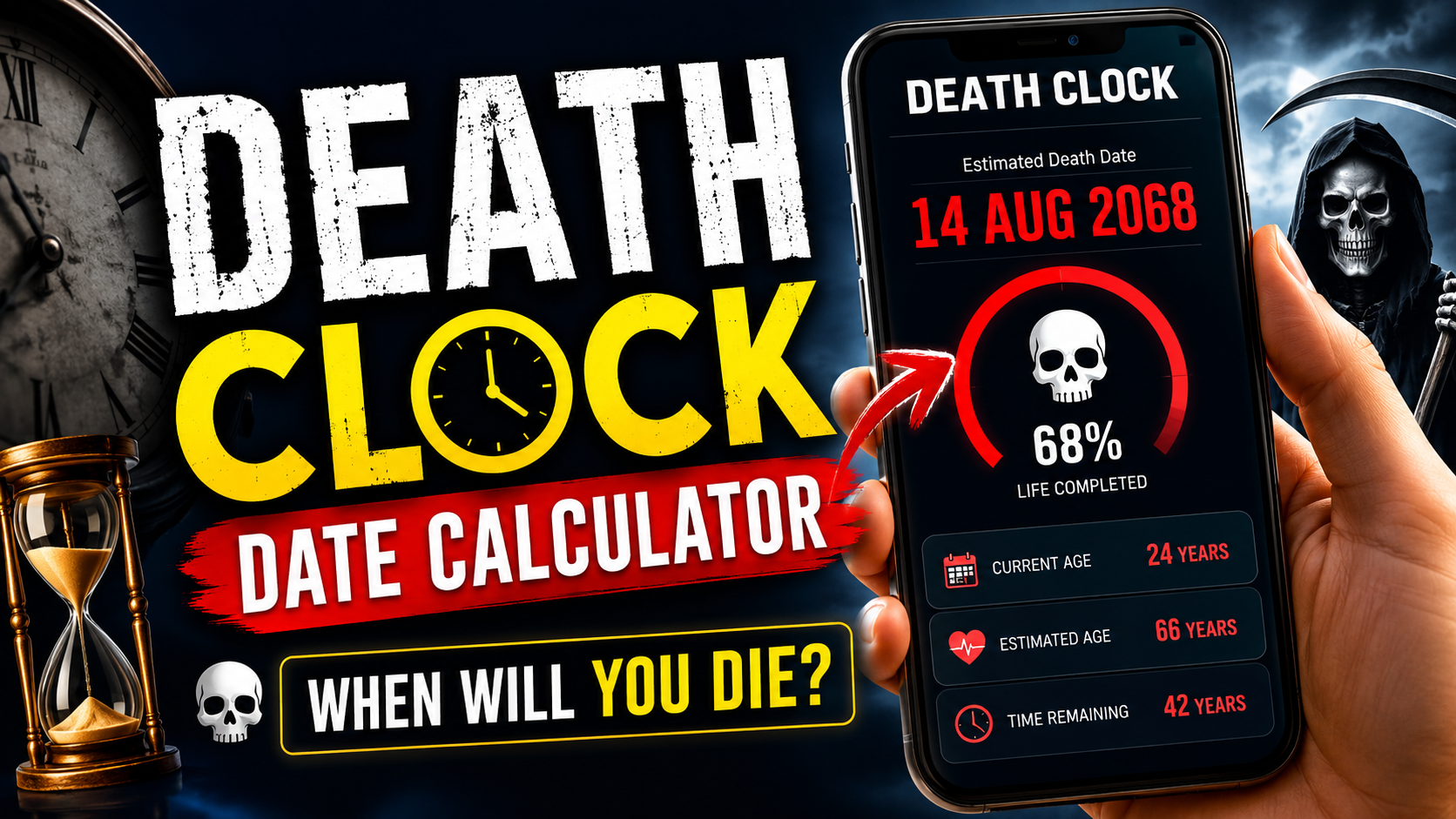
Have you ever asked yourself, “When will I die?” A Death Clock Date Calculator calculates your life expectancy based on age, gender, lifestyle, and health practices, even though no one can forecast the future with any degree of accuracy. Rather of producing accurate medical forecasts, these calculators are made for entertainment, curiosity, and health awareness. They estimate a potential lifespan using life expectancy averages and statistical data. This article will explain how a death clock operates, what aspects it takes into account, and why its conclusions shouldn’t be taken at face value.
What’s a Death Clock Date?
An estimated date of death produced by an algorithm or application is known as a death clock date. The calculator displays the precise day, month, and year you are expected to pass away when you enter a variety of personal information, from your basic age and gender to intricate lifestyle choices.
Modern AI vs. the nostalgic Web of the 1990s
You most likely recall The Death Clock’s initial website if you were online in the early 2000s. Your BMI, smoking status, and “perspective on life” (optimistic, normal, or sadistic) were requested on this straightforward, eerie website with a black backdrop. For the most part, it was viewed as a spooky and entertaining method to frighten your pals at a sleepover—a digital parlour trick. The idea has undergone a significant technological advancement nowadays. The death clock has evolved from a curiosity to a useful tool thanks to recent developments. In order to anticipate life trajectories, researchers created life2vec in 2023. This transformer-based AI model, which is comparable to ChatGPT, was trained on millions of people’s life events. Soon after, consumer-facing apps with deep data analysis were released, such as the Death Clock app.
How Does the Modern AI Death Clock Work?
The current generation of death clocks uses large datasets and machine learning, in contrast to the older calculators that relied on simple life insurance actuarial tables. The Jerusalem Post Modern apps use an extensive questionnaire to assess your life, looking at: Age, gender, genetics, and family medical history are examples of biological data. Blood pressure, cholesterol, and body mass index (BMI) are examples of biometrics. Lifestyle factors include smoking habits, alcohol usage, exercise regimens, and diet. Stress levels, sleep habits, and mental health are all aspects of psychological well-being.
The Ultimate Health Motivation:
In philosophy, there is a concept known as Memento Mori—remember that you must die. Having a physical countdown can be a powerful wake-up call. When a death clock algorithm reduces your life by 10 years due to your sedentary lifestyle or poor sleep habits, the abstract dangers of those habits suddenly become very real. Many apps now gamify this process, showing you how your death clock date will extend if you start walking 10,000 steps a day or give up smoking.
Planning for Retirement and Finances:
Financial planning is perhaps the most unexpected application of a highly precise death clock date. Outliving their funds is a major worry for retirees. Financial planners can maximise your pension, 401(k) withdrawals, and life insurance plans if you have a well calculated prediction of your longevity.
Conclusion:
It doesn’t have to be a depressing experience to discover your death clock date. Consider it a biological progress report rather than an inevitable doom. It serves as a clear, digital reminder to log off, go for a run, eat your veggies, and cherish the moment. Have you looked up the date of your digital expiration yet? Time is of the essence, so make the most of every moment, whether you utilise it for financial planning or simply as a reality check.